
How Babysitting is Filling Childcare Gaps in New Zealand
Find a babysitter or babysitting job, or stay up to date with the latest childcare tips!
Get started today for free.
Get startedNearly half of families in New Zealand rely on a babysitter at least once per week, with most childcare requests taking place during regular working hours. This highlights how babysitting is not just used for occasional support, but has become a regular part of how many parents manage their childcare needs alongside work.
Childcare Challenges in New Zealand
High childcare costs putting pressure on families
Childcare in New Zealand is among the most expensive in the developed world, placing significant financial pressure on families. In some cases, parents can spend up to 30–37% of their household income on childcare, with weekly costs reaching several hundred dollars depending on location and age of the child. These high costs often influence decisions around returning to work, reducing hours, or relying on alternative childcare arrangements.
Limited availability in high-demand areas
Finding childcare in New Zealand can be challenging, particularly in larger cities where demand is high. Parents are often encouraged to join waiting lists early to secure a place, and availability can vary significantly by region. This makes it difficult for families to find consistent childcare that fits their needs, especially for younger children.
Government support helps, but doesn’t cover everything
New Zealand offers some childcare support, including 20 hours of free early childhood education for children aged 3 to 5. However, this does not fully cover the needs of working families, particularly those with younger children or requiring full-time care. As a result, many parents still face substantial out-of-pocket costs.
Childcare doesn’t fully align with working hours
Childcare services in New Zealand typically operate during standard daytime hours, which do not always match modern work schedules. Early mornings, late afternoons, and school holidays are not always covered, creating gaps that parents need to fill. This has led many families to rely on more flexible options, such as babysitting, to manage their daily routines.
Childcare statistics: How babysitting has become part of working family life
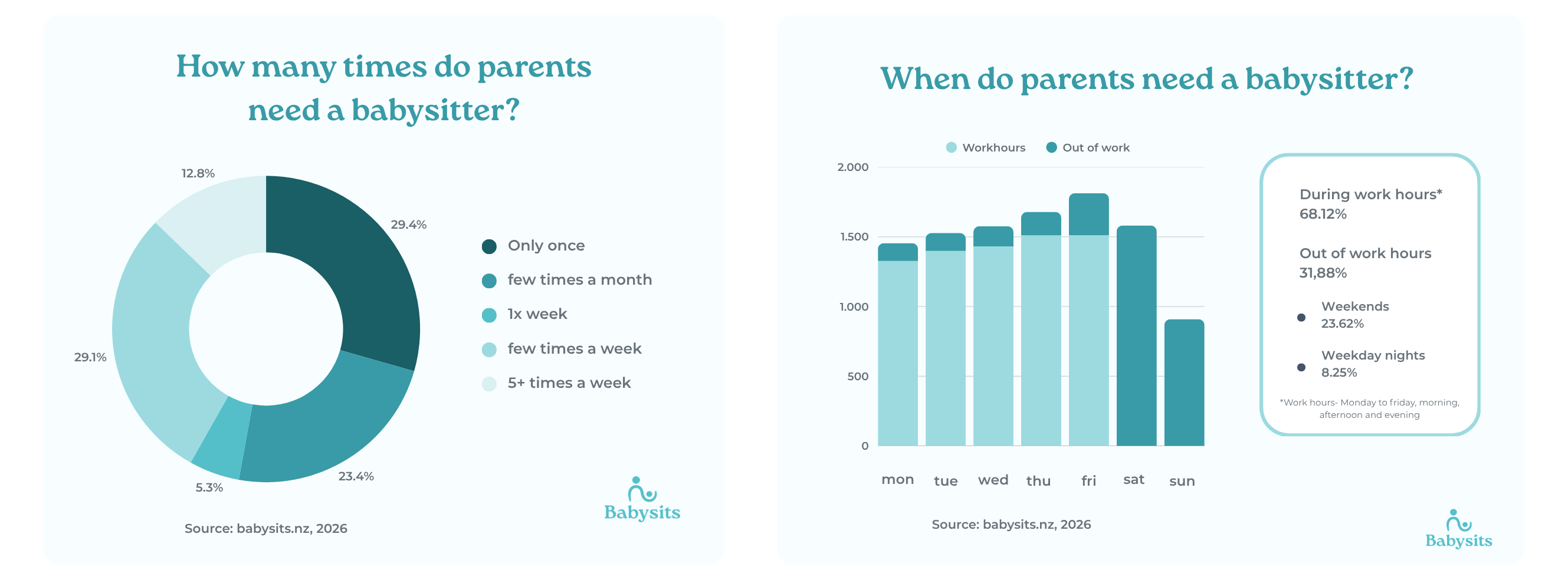
Based on Babysits data for New Zealand:
47.2% of families need a babysitter at least once per week
41.9% need a babysitter more than once per week
68.12% of childcare requests take place during regular working hours
These patterns show that babysitting in New Zealand is not just occasional, but a regular part of how many families manage childcare. While just under half of families rely on babysitters weekly, a significant share need care multiple times per week, highlighting ongoing childcare needs rather than one-off use.
At the same time, most childcare demand takes place during regular working hours, showing that babysitting is often used to support parents’ work schedules rather than just evenings or occasional needs. In New Zealand, where childcare is costly and doesn’t always fully cover working hours, these patterns reflect how families are turning to flexible solutions to bridge the gaps. This raises a broader question: is this unique to New Zealand, or part of a wider trend?
A Worldwide Perspective on Childcare During Work Hours
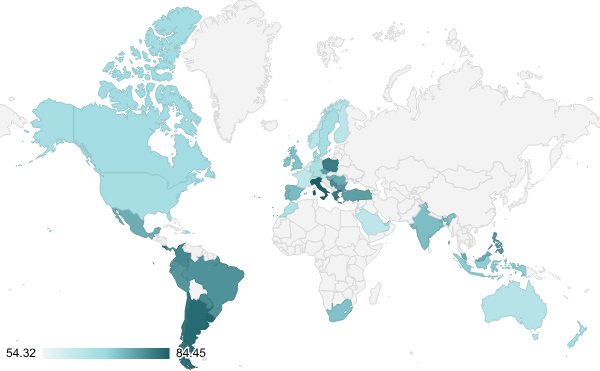
With 68.12% of childcare requests taking place during work hours, New Zealand sits slightly above the average among countries where Babysits is active. While many countries cluster between 55% and 65%, New Zealand’s share is somewhat higher, placing it closer to countries where childcare demand is more closely tied to working schedules, though still below the highest levels seen in countries such as Italy, Chile, and Greece, where this figure can exceed 80%.
This highlights how childcare needs in New Zealand are strongly influenced by parents’ working patterns. Compared to countries such as the Netherlands and Belgium, where demand is more evenly distributed across the week, families in New Zealand rely more heavily on childcare during standard working hours. At the same time, this pattern is not unique to New Zealand. Across countries, childcare demand is increasingly shaped by modern working patterns, showing that while New Zealand sits slightly above average, the underlying challenge, of aligning childcare with work, is part of a wider global trend.
How families and employers are adapting to childcare gaps
“Babysitting is no longer an occasional solution for families. Parents are using babysitters and nannies to manage work schedules and fill gaps where traditional childcare falls short” – Peter, CEO of Babysits and parent of three.
Companies are also beginning to recognise this shift. Some employers are introducing broader or more flexible employee childcare benefits to help employees access extended childcare, including babysitting, when they need it.
“We’re seeing more and more companies show interest in our childcare employee benefits program, Babysits for Work” – Peter, CEO of Babysits
As work continues to evolve, flexible childcare options such as babysitting are becoming an essential part of how families manage their childcare needs in the years ahead.